
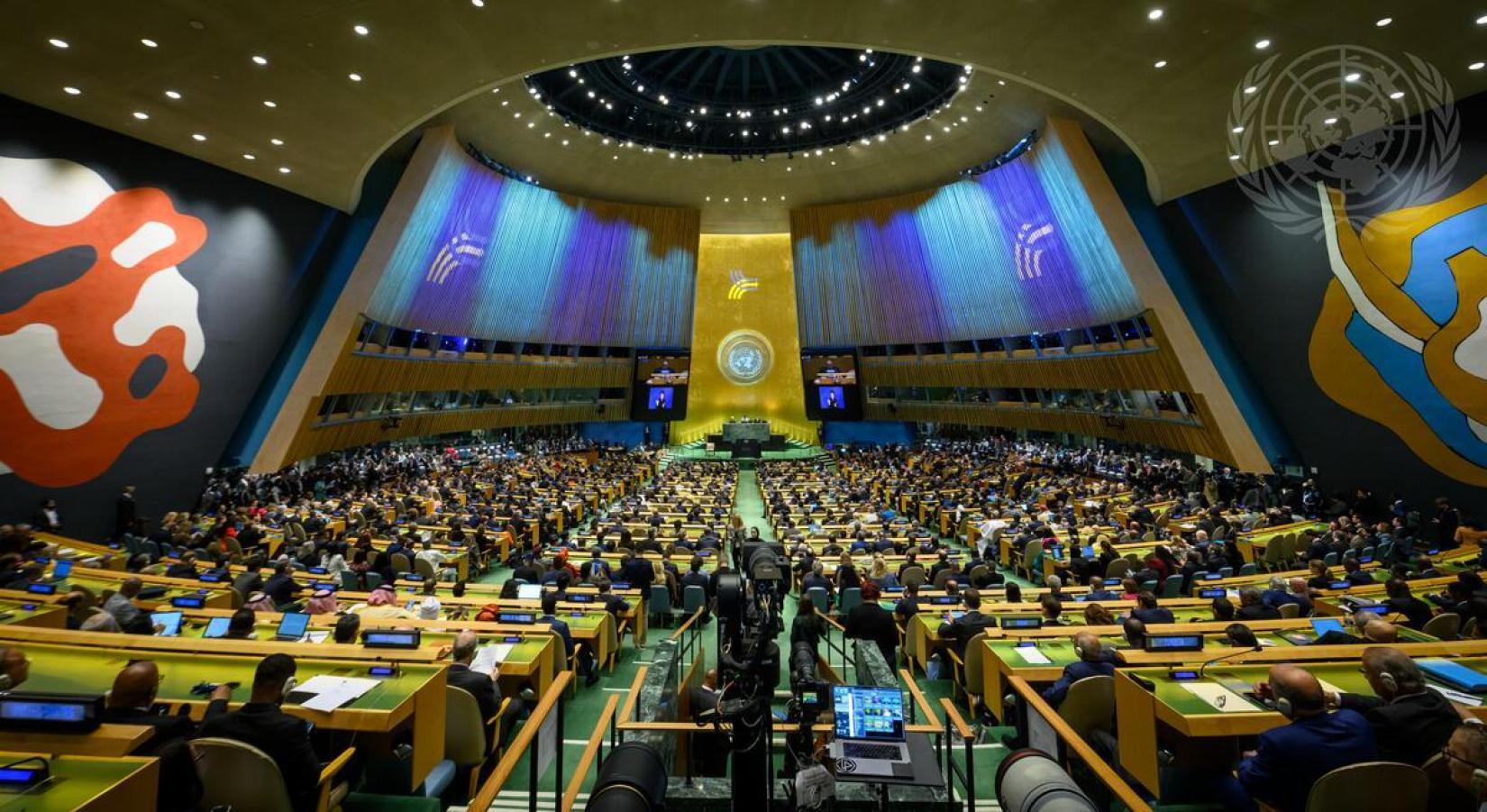
Artificial Intelligence: High-Level Meeting on International Cooperation for Capacity Building
Address by UN Deputy Secretary-General Amina J. Mohammed at the Meeting on International Cooperation for Capacity Building in Artificial Intelligence H.E. Wang Yi, Minister of Foreign Affairs of the People’s Republic of China, H.E. Felix Mutati, Minister of Science and Technology of the Republic of Zambia, Excellencies, Ladies and Gentlemen, I thank the Governments of China and Zambia for hosting this High-Level Meeting on International Cooperation for Capacity Building in Artificial Intelligence. We are at a true inflection point. Artificial Intelligence is developing at an unprecedented pace, transforming our world in ways we are only beginning to understand. It has the potential to help deliver on the Sustainable Development Goals (SDGs) and establish a more sustainable and equitable future. Recent studies show that AI can help accelerate the achievement of about 80% of the SDGs. Yet we face a stark reality: AI’s opportunities are not shared equitably. Today, AI capabilities are concentrated in a handful of powerful companies—and in even fewer countries. These companies are led exclusively by men, and the algorithms they are building risk reinforcing gender and geographic biases. Meanwhile, many countries face significant challenges in accessing AI tools, and many women and girls lack access to the education that could serve as a platform for careers in this emerging field. Your Excellencies, To truly harness the potential of AI, we need international cooperation—and solidarity. We must urgently close the AI capabilities gap for developing countries and for women and girls. Similarly, the risks posed by AI are uneven. Without adequate safeguards, AI could further exacerbate inequalities and digital divides—again, disproportionately affecting the most vulnerable. Your Excellencies, Technology should benefit everyone. AI must be a tool to bridge the development gap, the digital divide and the gender gap. As we build AI capabilities, we must also develop shared knowledge and digital public goods. This can be achieved through networks where AI expertise and training data are pooled and made available to all who need them. Interconnected AI hubs across countries and continents can accelerate AI advancement, promote data diversity and inclusion, and foster cooperation rather than competition. Last week, the Secretary-General’s High-Level Advisory Body on AI issued its final report, with a series of recommendations, including: 1 - Create an AI Capacity Development Network to connect AI hubs and provide expertise and training data, especially for developing countries; 2 - Establish a Global AI Fund for the Sustainable Development Goals; 3 - And develop a Global Data Framework, so that local AI ecosystems can flourish. Many of the recommendations of this Body have been integrated into the recently agreed Global Digital Compact – a landmark agreement that will advance global digital cooperation. The Compact includes the first truly universal agreement on the international governance of AI. It also supports networks and partnerships to build AI capacity in developing countries. It commits governments to establishing an independent International Scientific Panel on AI. And it represents the first collective effort to agree interoperability standards. Excelanacies, The United Nations is uniquely positioned to foster digital cooperation and support the global exchange of best practices for AI capacity building. I encourage everyone to promote collaborative AI and engage in innovative partnerships – in line with the Global Digital Compact. Together, we will develop innovative and inclusive tools for AI governance and cooperation – and build a more sustainable and equitable future for all, in which no one is left behind. Thank you.© Galegale. All rights reserved.